What is Dog Agility?
In short, Dog Agility is a obstacle course that dog and handler need to navigate in order to complete it, correctly, accurately and in the fastest time. All the equipment involved is here:
- Jumps
- Weaves
- Tunnels
- A-Frame
- Dog-Walk
- Seesaw
A standard agility course is numbered 1-20, in competitions, handlers must walk the courses to learn it within the allocated time (usually 15 minutes to course walk), then the running starts. Competitors get 3 runs each but not all at once. The running order is usually posted prior to the event and then it’ll repeat twice until the end. All runs are timed and scored for faults but only your best run of the 3 counts. The winner is the handler who completed it with the least amount of faults in the fastest time, faults and clearing courses is much more vital than the actual time. For example, I compete in my club’s steeple chase which has all sizes of dogs with my Bertie, who is in the ‘small class’ but in my class, we run it as an AnySize competition so all dogs are marked against each other. I’m not delusional to think Bertie will make it around the course quicker than a border collie for example. However, as you’ll see Here, Bertie in fact did win one of the Steeplechases my club ran. This was all down to his accuracy and our ability, as a combination, to complete the course with no faults. This section was just a brief overview of agility. We’ll get into the meat and bones of it now!
How does Dog Agility Work?
In this section we’ll cover the different agility equipment in depth and how you get your dog to run the course.
Jumps
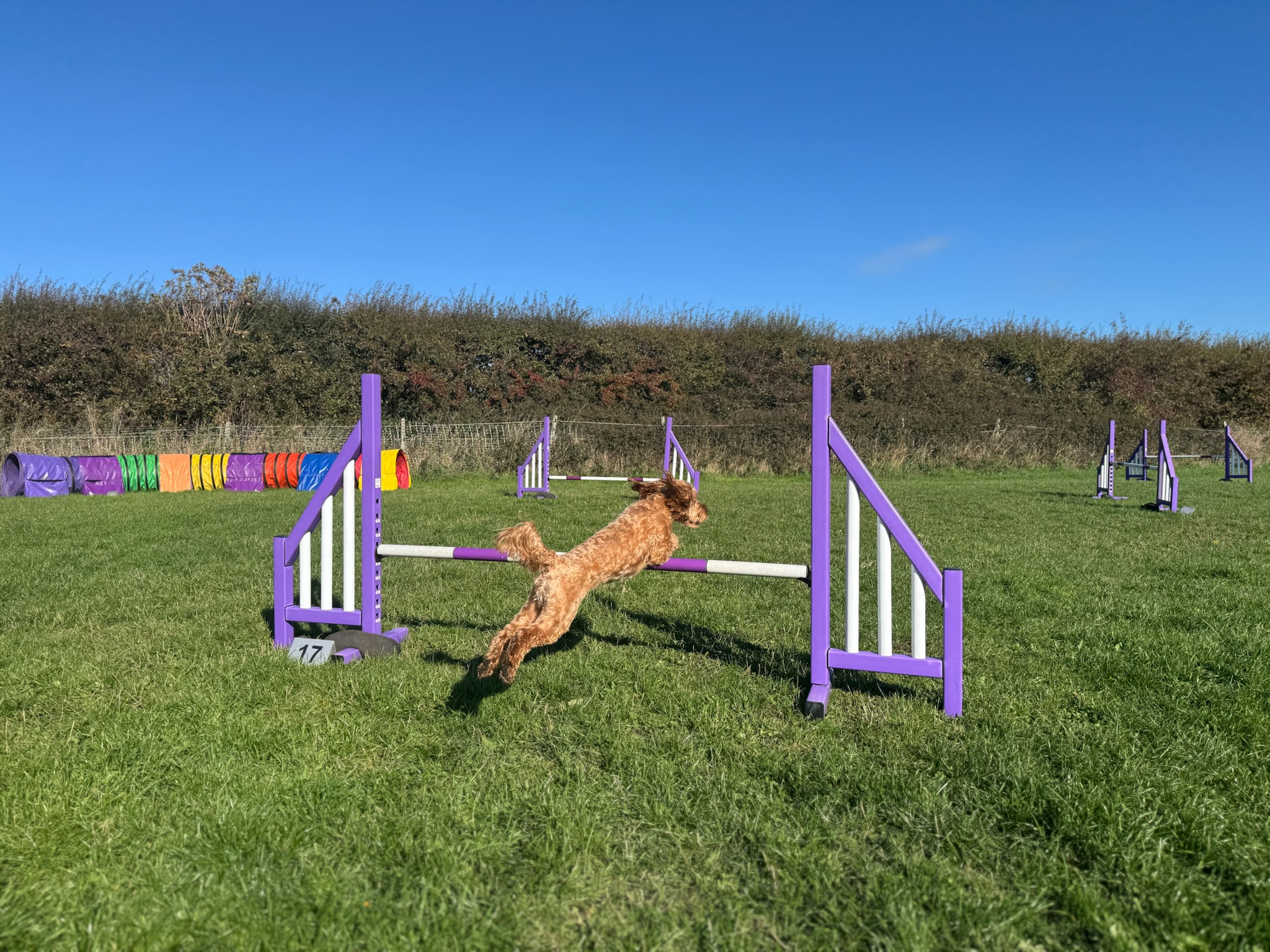
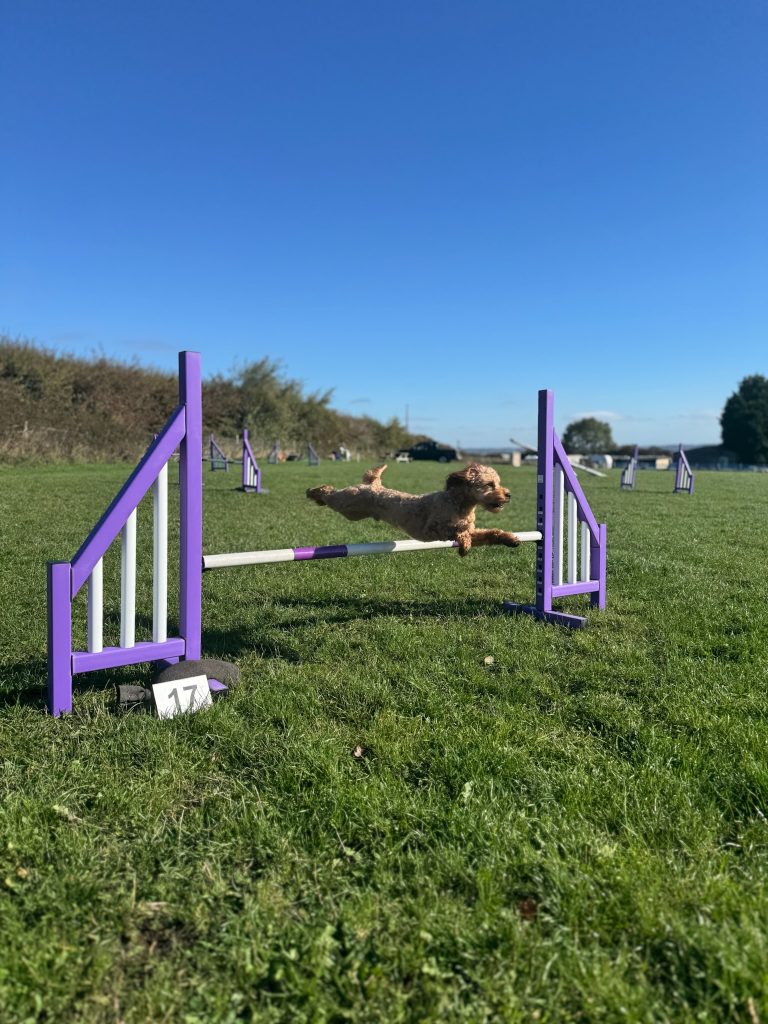
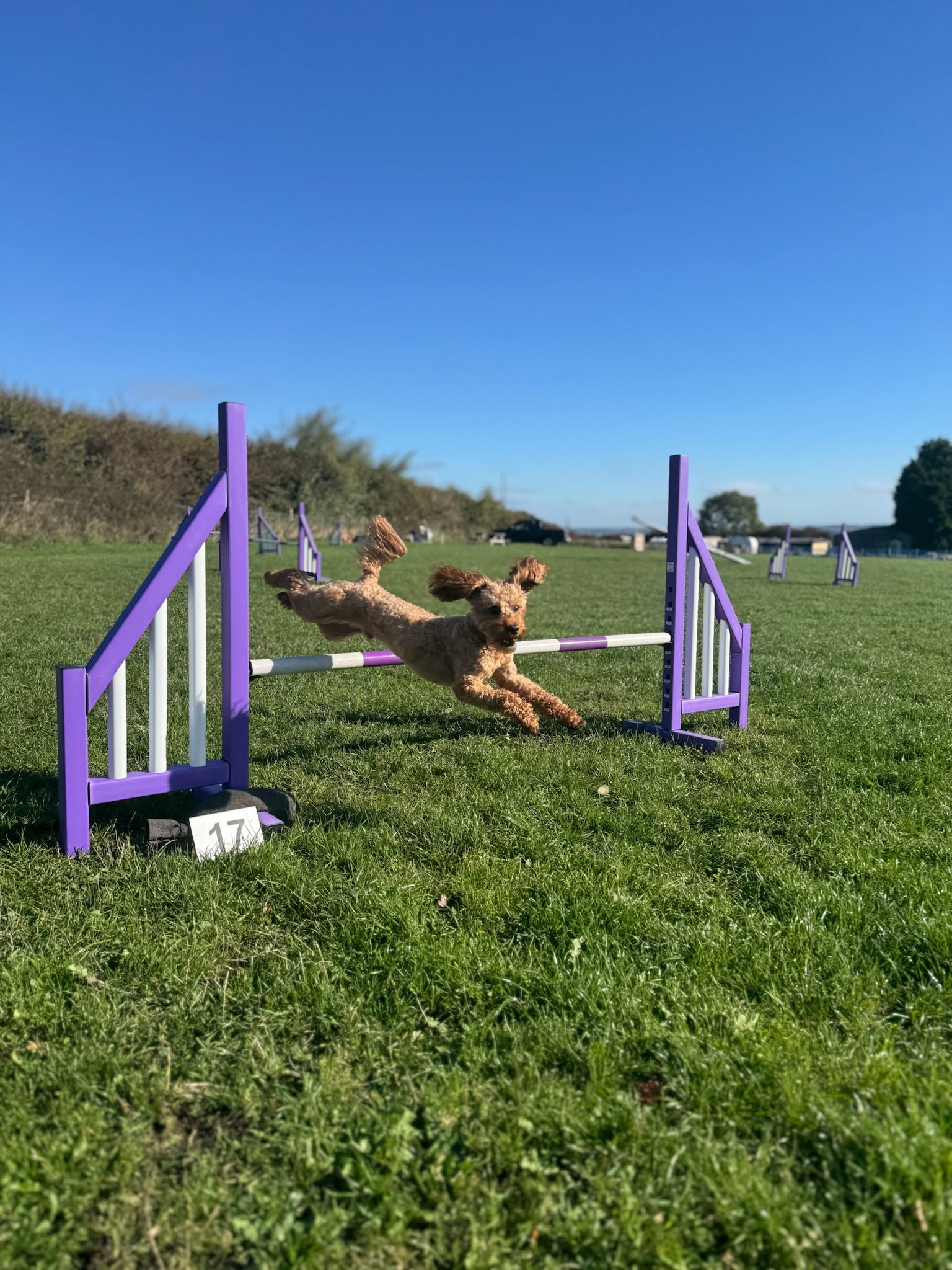
I thought it was fitting to introduce jumps first as they’re the most common piece of equipment in dog agility. A jump consists of two ‘wings’ and a pole between them. As simple as they sound, they’re anything but that trust me. So Bertie is at the stage where he can start competing and because of this, we train in the top group in my class, which they label ‘pre comp’ for competing dogs. This week in class we’re all going back to working on our command cues on jumps and that’s all we’re doing for the hour. All the dogs in this class are bloody wonderful so I hope this’ll help drill it into you how important the foundations are and how complex jumps actually turn out to be. This isn’t to scare you off, this depth of cues are only relevant for the top of the top dogs wanting to be millimetre perfect, you can actually get really far and compete with just a few basic jump commands if they’re drilled properly and your dog understands them. Look out for my weekly cue of the week post to really dive into individual commands. So now let’s zoom out and go onto the basic commands:
- Over – Jumping straight over a jump and carrying on forwards
- Right wing wrap – Jumping over the jump and turning right, coming around the wing back to the handler
- Left wing wrap – Jumping over the jump and turning left, coming around the wing back to the handler
- Round – Going around the outside of the wing and jumping over the back of the jump and usually back to the handler
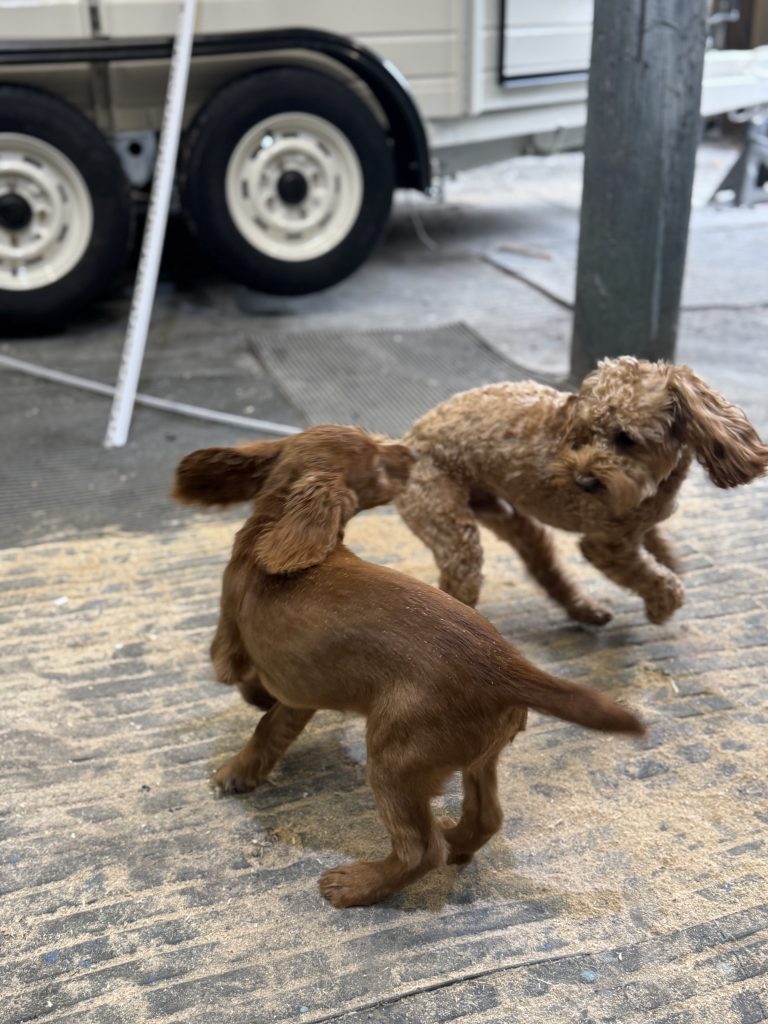
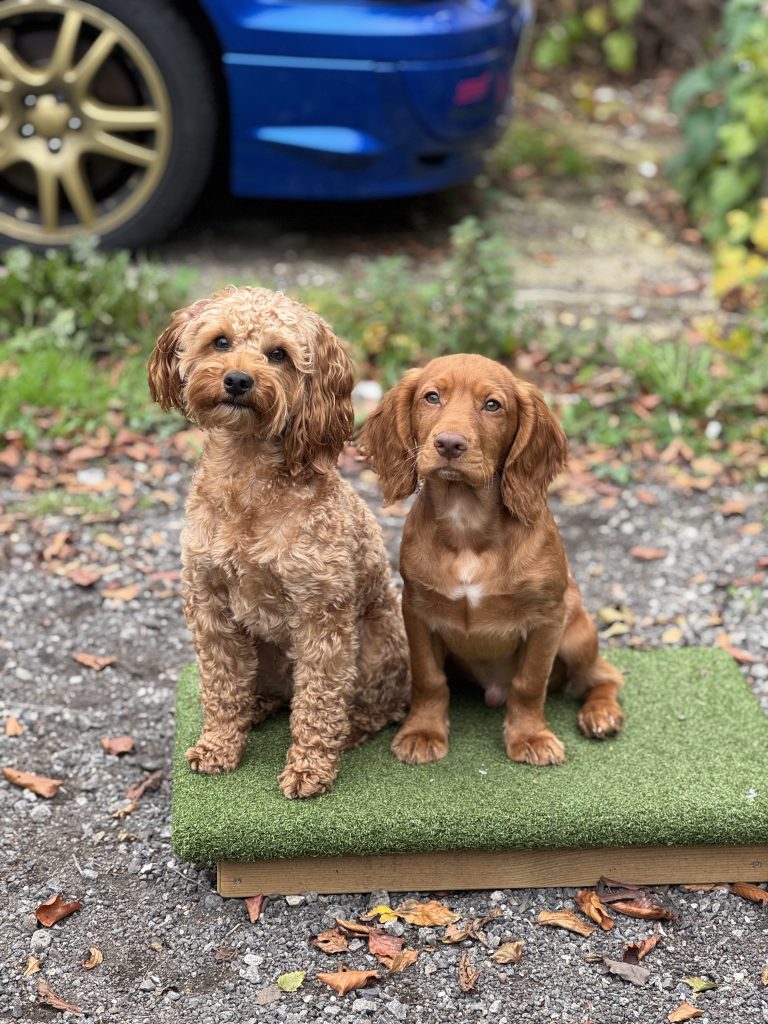
To be completely honest, if you get these foundation commands down absolutely perfect you’ll be flying. As for actual words and cues for them, there’s no set or standard words, you use whatever you want, which actually leads to it being quite funny in class when everyone’s shouting different words to their dogs to do the same thing. For Ralphie, my Working Cocker Spaniel Puppy, my commands are as follows: Over for just a straight jump, ‘Ra Ra’ for a right wing wrap, ‘Tik Tik’ for a left wing wrap and Round for going around the back. If you take one thing away from this post let it be this: With Bertie I messed up BIG time with his wing wrap actual cues, I used the words ‘left or right’. Horrible mistake, do not do this whatsoever. Eventually you’ll want to use left and right as direction cues for the way you want the dog to continue after a straight over. With Bertie, I struggle with this massively. Follow along the blog to see how much it hinders us as we get through the grades…..
Tunnels
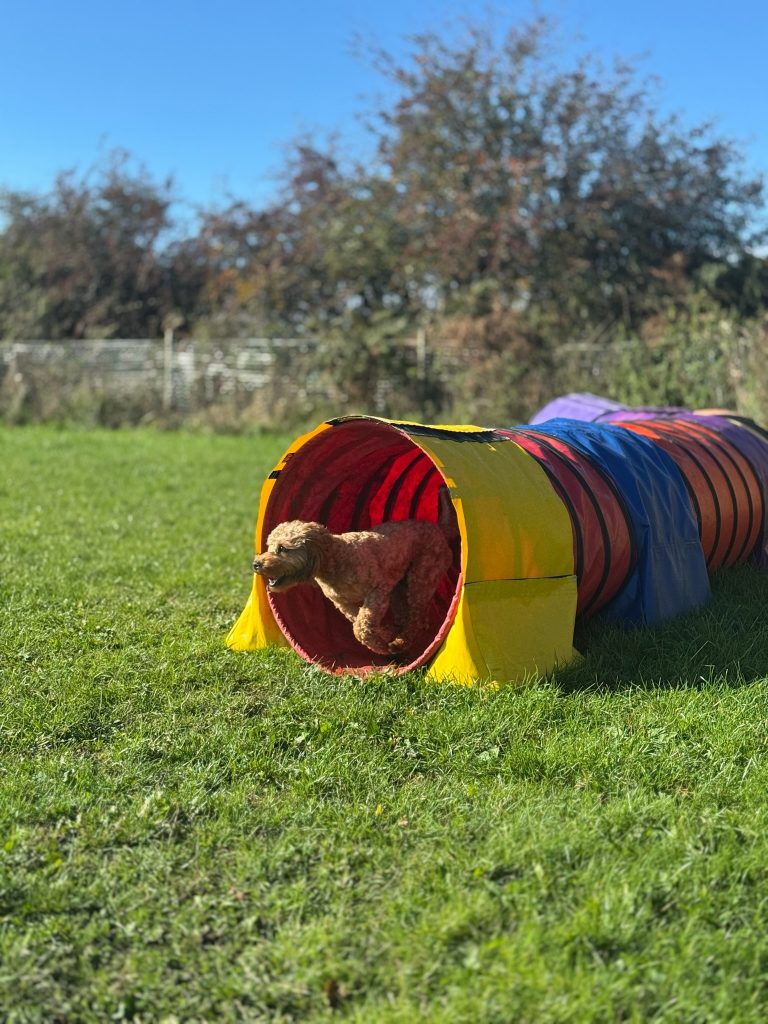
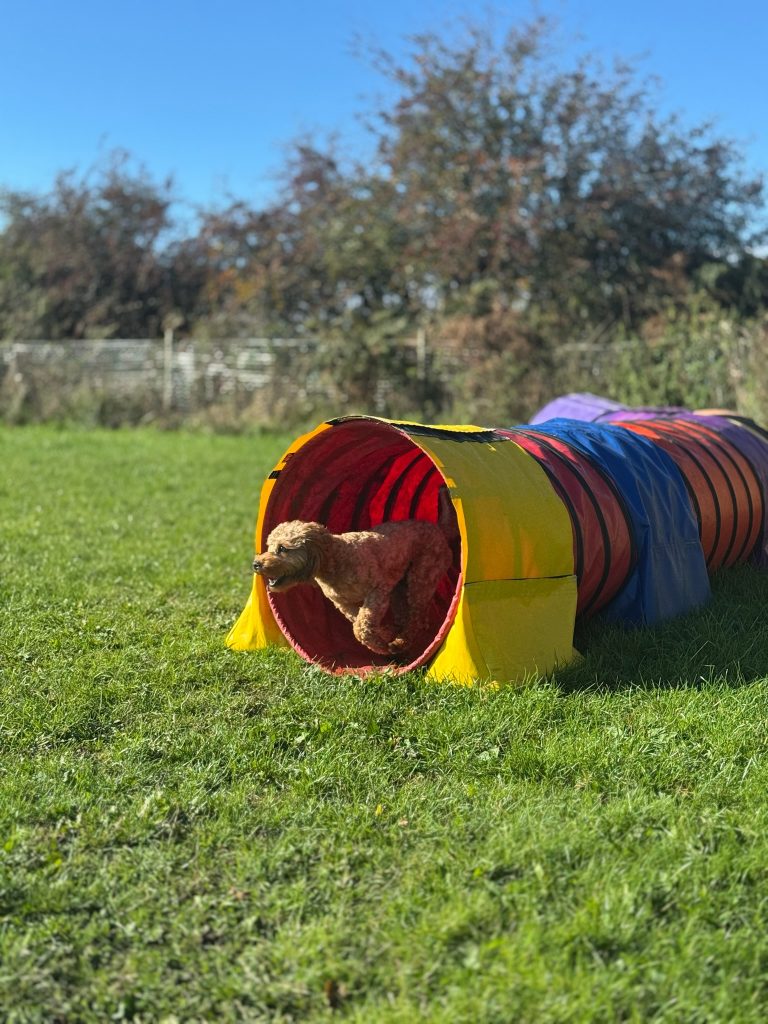
Everyone’s favourite piece of equipment is the tunnel. Dogs absolutely love it, which is both a blessing and a curse; A blessing being, usually the easiest equipment to teach but a curse being, usually the hardest piece of equipment to keep your dog out of when they’re not meant to be going through it. Very, very simple equipment your dogs just have to enter one end and exit the other and that’s that really.
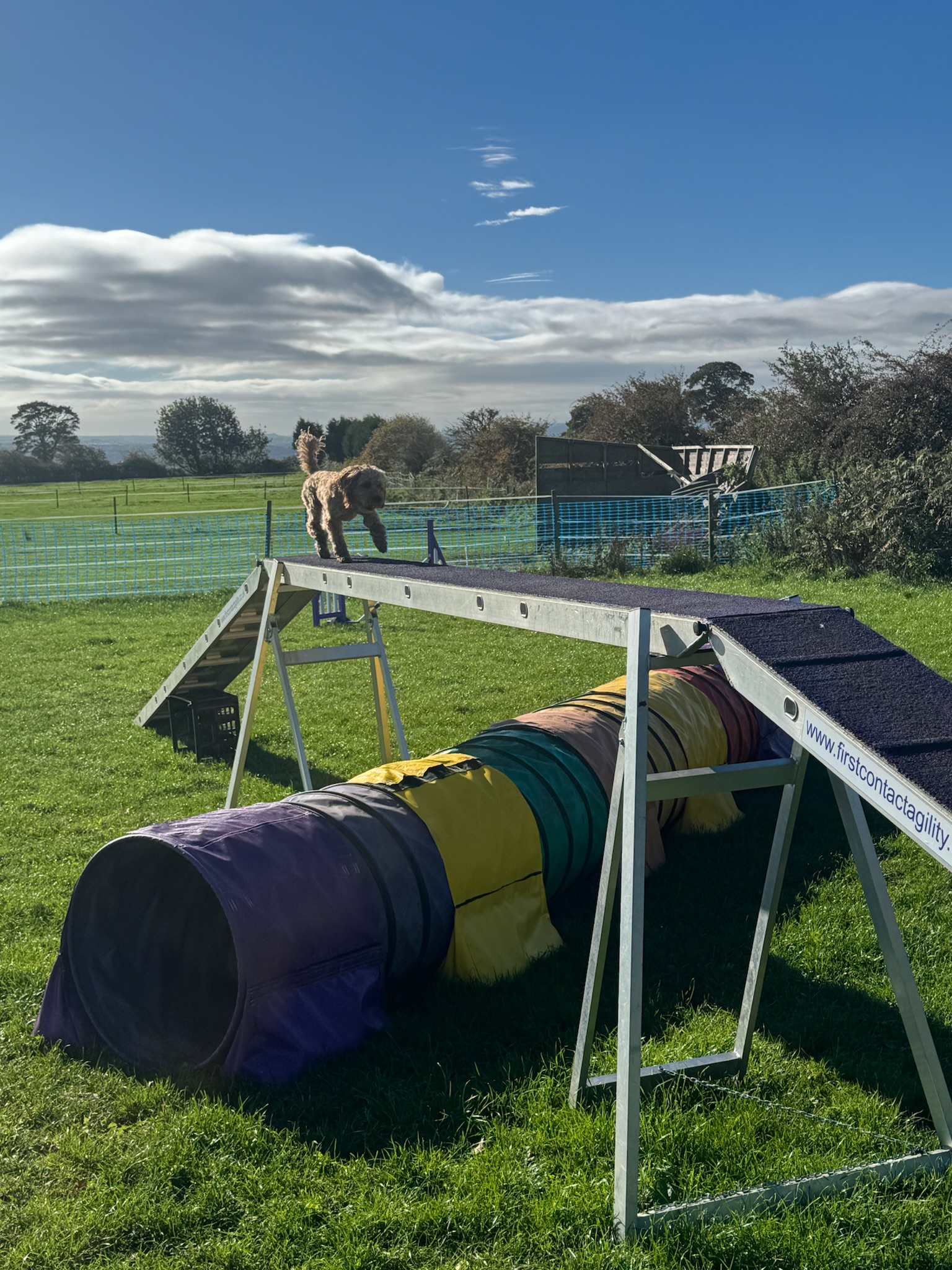
Dog-Walk, Contact
A-Frame, Contact
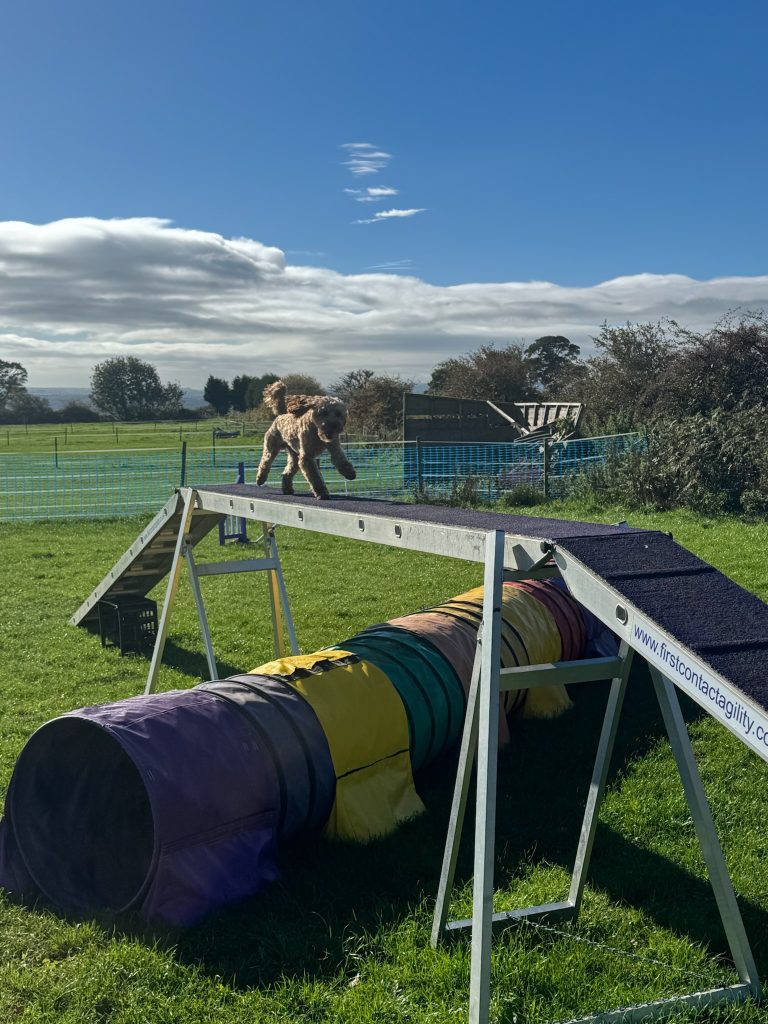
Our first piece of ‘contact’ equipment included in the list. They’re referred to as being a ‘contact’ as the dog must touch the different coloured part (in my classes they’re yellow but can vary depending on the manufacturer) at the end of the equipment to be awarded completion of the equipment. The dog walk is the simplest of the 3 contact equipment in my opinion so we will start with it. The dog walk is an equipment piece consisting of an upslope, a flat horizontal part at the top and a downslope. Once touching the bottom, the dog must walk (run) completely across the equipment and touch the contact area at the end before it’s considered cleared. This piece of equipment usually relies on 3 things: Good forward drive so your dog doesn’t jump off halfway, confidence with heights so your dog isn’t nervous, and a good understanding of the contact zone. All 3 of which are trained into your dog, nobody gets it perfect first time trust me. Click here to see how I managed to train a lower drive dog to do the dog walk perfectly!
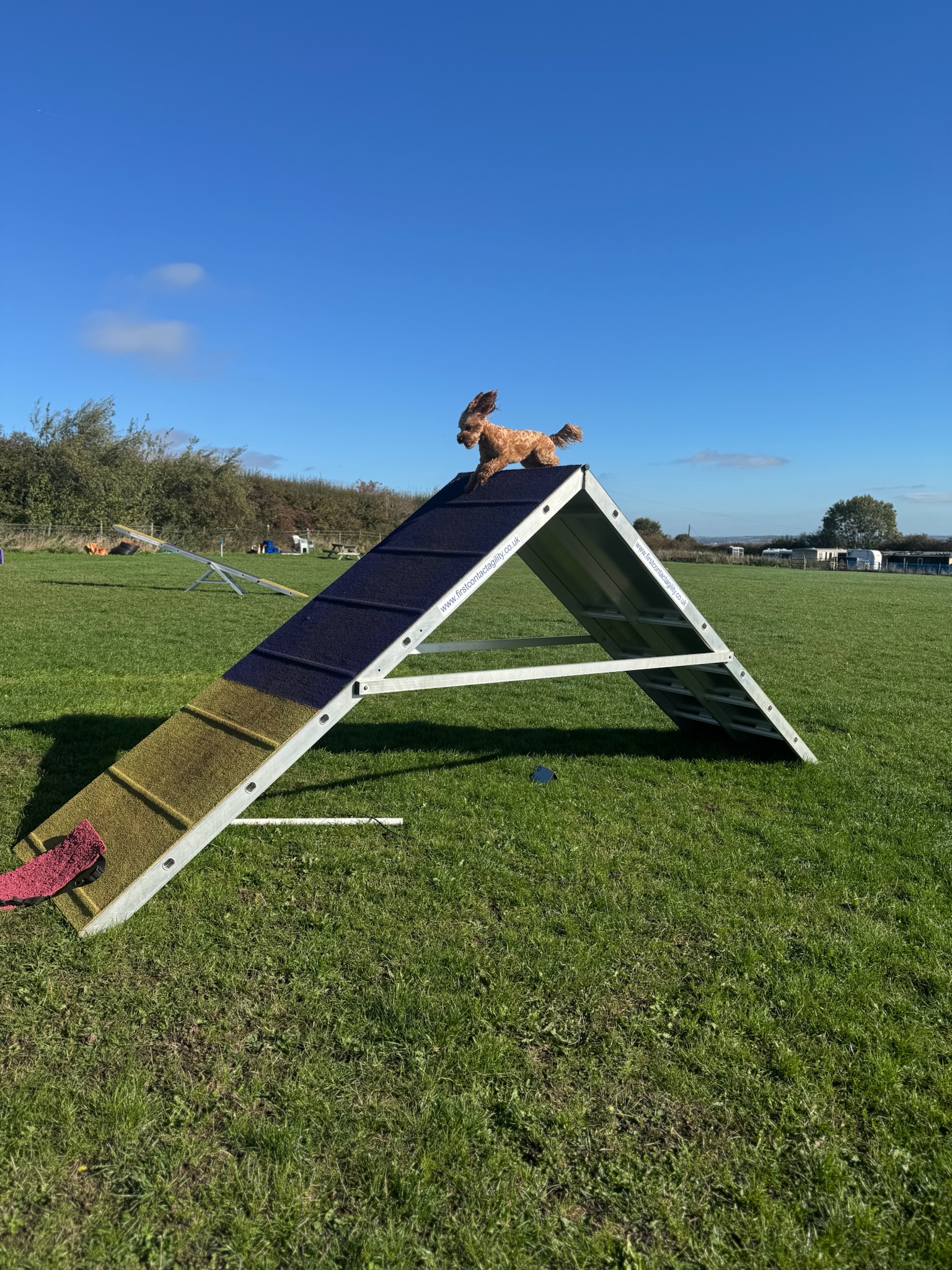
So just like the dog walk, this equipment also has a contact area. Whilst visually it looks much larger and easier to complete, trust me it’s anything but. With the downslope being so steep, bigger and more confident dogs love to jump from the top down pretty much and with it being such a short and fast obstacle, it’s so hard to cue and work on it. Bertie absolutely loved the A-frame at the start, he loves climbing so it was a right pig trying to get him off of it. Then he started to make a pig of the contact but now I cracked the code and it’s his best piece of contact equipment. Click here to see how I fixed A-Frame faults in dog agility.
Seesaw, Contact
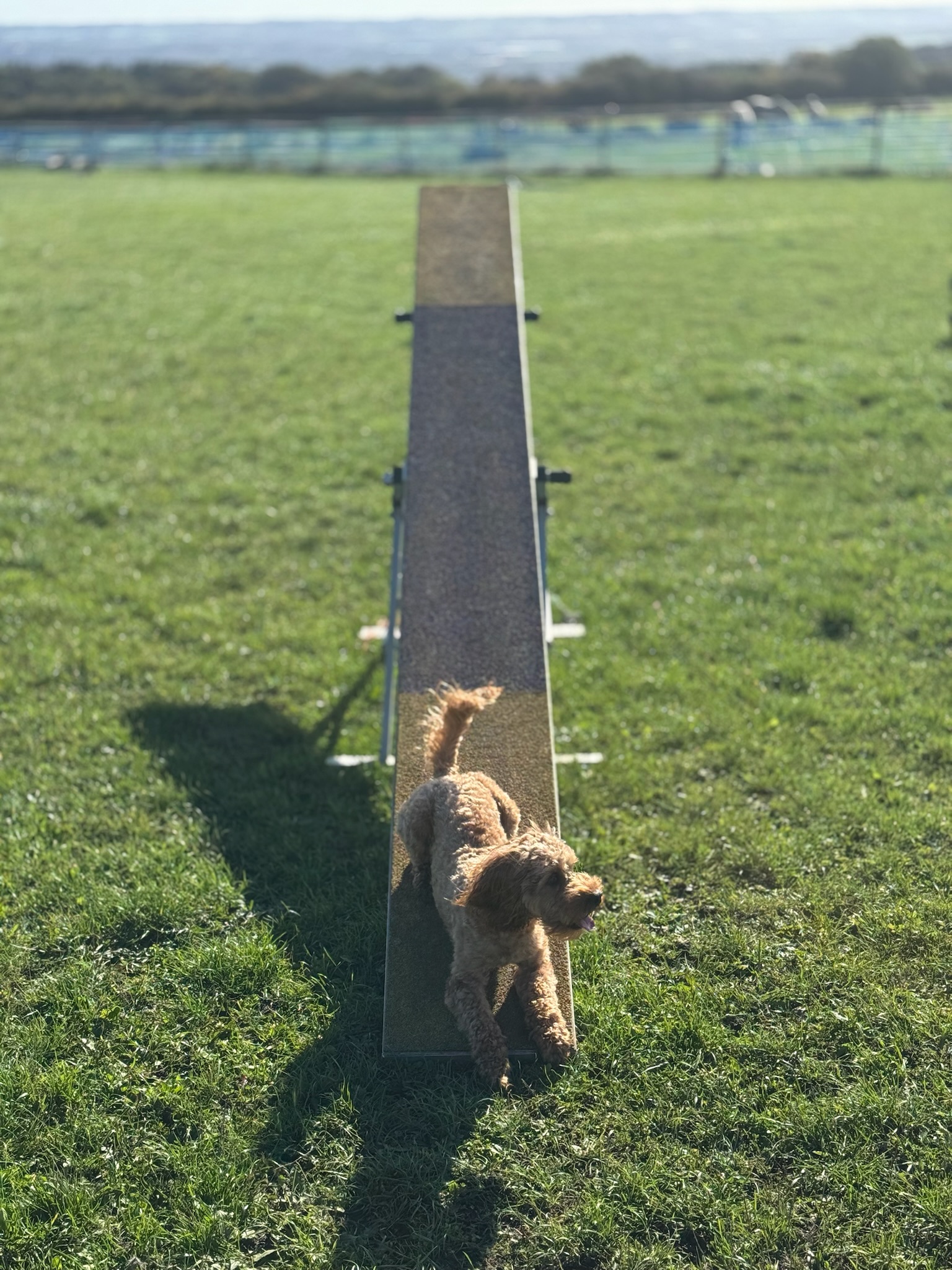
Probably the most daunting of the 3 pieces of contact equipment in agility…. Dogs bloody hate feeling like they’re falling so whilst it’s the shortest and in theory simplest, it’s all bout confidence building from the start. To be completed, the dog must run up the seesaw and make contact with the yellow contact area, BUT they must wait for the seesaw to fully tip and make contact with the floor before moving on or else they failed to clear the obstacle. The most important part here is to have a clear command and your dog having clear understanding of the difference between your cue for the seesaw and dog walk. Visually to a dog, they look identical on the upslope, which can prove to be very dangerous if your dog runs up the seesaw thinking it’s the dog walk and they don’t brace to stop and instead run straight off the end. This has happened to Bertie multiple times and is a complete confidence killer!
Weaves
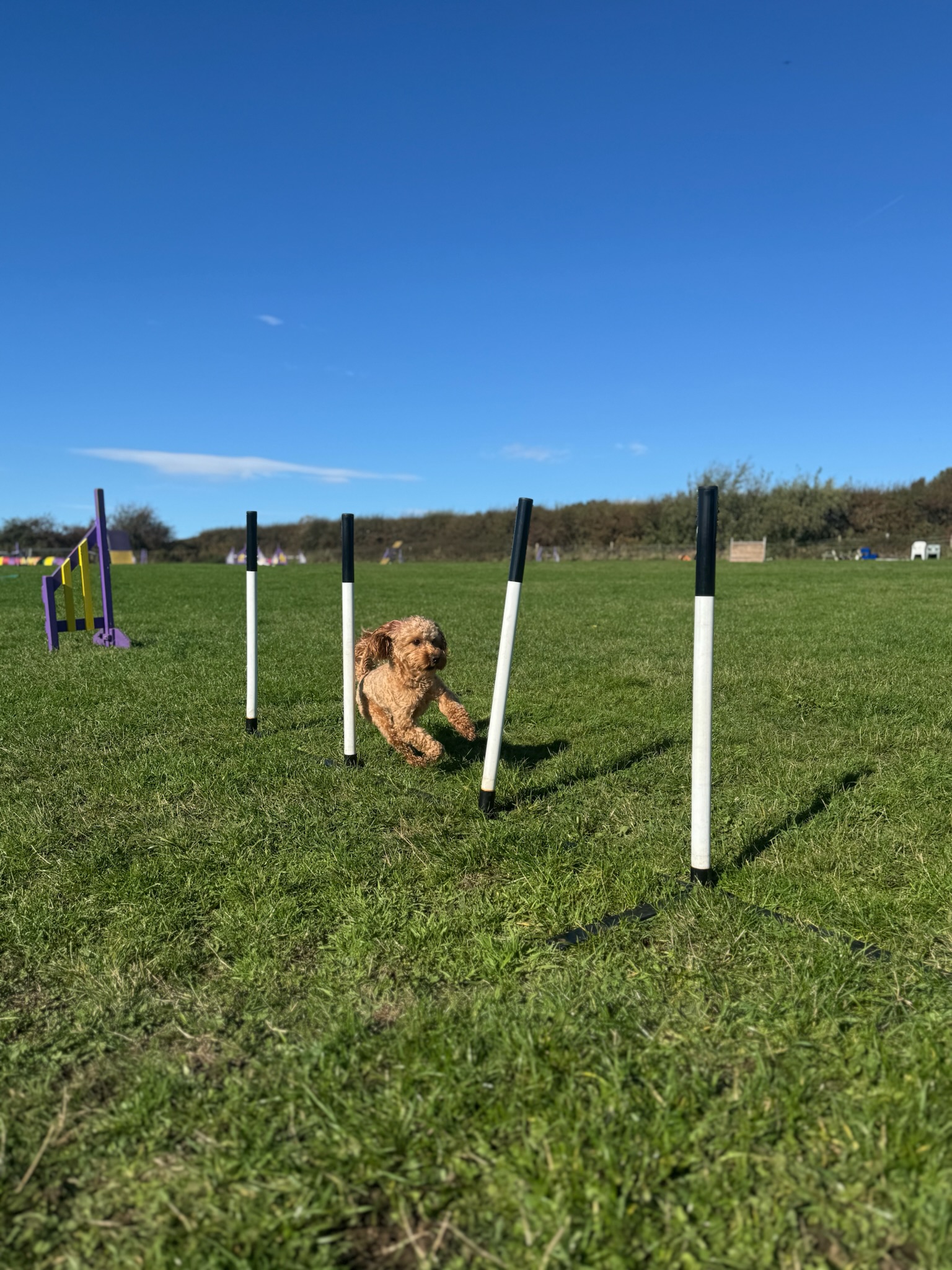
The most frustrating of the lot, the bloody dog agility Weaves. In agility competitions, you have two choices: Jumping or agility. Agility involves all of the equipment here whereas jumping includes Jumps, obviously, Tunnels and Bloody weaves! That means to compete at all your dog must have mastered the weaves (or at least be half competent enough to attempt them). What are Dog Agility Weaves? They consist of 12 equally spaced vertical posts all aligned straight. Dogs must enter with the first pole on their left and then weave in and out around each pole until the end. Now here you may be asking, ‘How do I master Dog Agility Weaves?’ Well, well I can’t yet help you with that but I can share my frustrations here in the post about the unsolved puzzle of agility weaves…. Go and give it a read if you’re struggling with weaves because trust me, you’re not alone!
Why’s Dog Agility so Addictive?
For me, the love of agility all comes from the bond it’s helped me build and strengthen with Bertie. Words can’t describe how exponentially proud I am of him whenever he does something right or completes a full course cleanly. Seeing his little face light up or how giddy he gets when jumping and running around. Your dog will absolutely love it, if you make it nothing but fun that is. For us, agility is purely just fun, whenever I train, I make it fun for Bertie and now Ralphie, my Working Cocker Spaniel puppy. That’s not to say we don’t take it seriously though because we do! Bertie should hopefully have his weaves solved by the 2026 season and we will be competing and working our way up the grades finally! By making every session fun and entertaining, Bertie loves it and a dog that’s having fun engages so much more and drives that little bit harder for you! And that’s where the addiction is, the feeling of seeing your dog’s face light up and drive over and through stuff is unmatched.
Can any Dog do Dog Agility?
Absolutely yes, any dog can do dog agility. Bertie, the un-papered Maltipoo from a backyard breeder, should be all the proof you need from this. That dog is truly amazing and I hope time will show you all how high up the grades he can actually go! However, the main question here should be: Will every Dog do Dog Agility. No, not every dog is interested in it. My Franking bloody hates it, he’d much rather sniff and piss all over the place than work. Whilst I do think if I persisted with training him for agility, he would have eventually taken to it and done something, you can’t force your dog to enjoy it; it just isn’t fair on the dog. My lead trainer has 13 Working Border Collies and not all her Collies show interest in it and she’s been training agility for the last 30 years.
Getting Started with Dog Agility?
The big, daunting question and one that pushes most new handlers away from it. If it’s your first time handling an agility dog, always go to a class. But I’m not too naive to realise that’s the most daunting part. I was once in your position and the same questions of: What if my dog shows me up in an Agility Class? What if I look out of place at a Dog Agility Class? What if my dog isn’t good enough at Dog Agility? Truthfully, I’m a 23 year old man training agility where most of my classes are filled with 30+ year old women and whilst yes I probably do look out of place from the outside looking in, but inside, nobody gives a flying crap and that stretches to all of these questions here. Nobody judges, nobody is perfect and I can almost guarantee you, there’ll always be someone ‘worse’ than you in your class. I train with Pingy Agility based in Sheffield and our group consists of over 50 dogs and handlers, split into 3 separate classes on a Tuesday evening. Genuinely, find your local club, explain who you are, your experience and what you want to do and just give it a go. You won’t regret it whatsoever, just get yourself out there!!
Dog Agility at home?
If you want to be extra prepared for your first class or just want to be a show-off top of the class dog and handler combination, training at home away from classes is the way to go! Here’s a quick rundown of what you can do by yourself
- Grab yourself a set of cones and practice luring your dog around them, eventually adding your wing wrap command to it etc.
- Practice touch-to-hand command, a huge on for accurate luring and connection with your dog. Get your dog to nose your hand on command with a ‘touch’ command
- Send dogs round trees, round paths etc. My personal favourite with Bertie, constantly doing Wing wraps round trees in the woods or sending him ‘out’ down other paths to loop back to my path.
Final Thoughts: Why You Should Try Dog Agility
Dog agility has completely changed how I see training and working with my dogs. It’s not just running them round a few jumps for the sake of it — it’s proper teamwork. You start to understand how your dog thinks, moves, and reacts, and the bond that builds from that is unreal. Watching your dog switch on, focus, and absolutely love what they’re doing is one of the best feelings ever. It’s taught me so much about patience, body language, and just slowing down a bit and enjoying the small wins. Whether you’ve got a high-drive spaniel like Ralphie or a little scruffy one like Bertie, there’s something in agility for every dog. Start small, make it fun, and don’t overthink it — it’ll all click eventually. Follow along on the blog and see where this journey takes us because, honestly, we’re just getting started.
Join the JumpStart Agility Newsletter
Get the proper, no-fluff side of dog training and agility — real handling, real mistakes, and the wins that make it all worth it. I’ll be sharing how I’m getting on with Bertie and Ralphie, from agility to puppy training and behaviour work, with all the ups and downs in between. If you’re after honest progress, proper at-home tips, and the full journey as it happens, this newsletter’s for you.