Intro
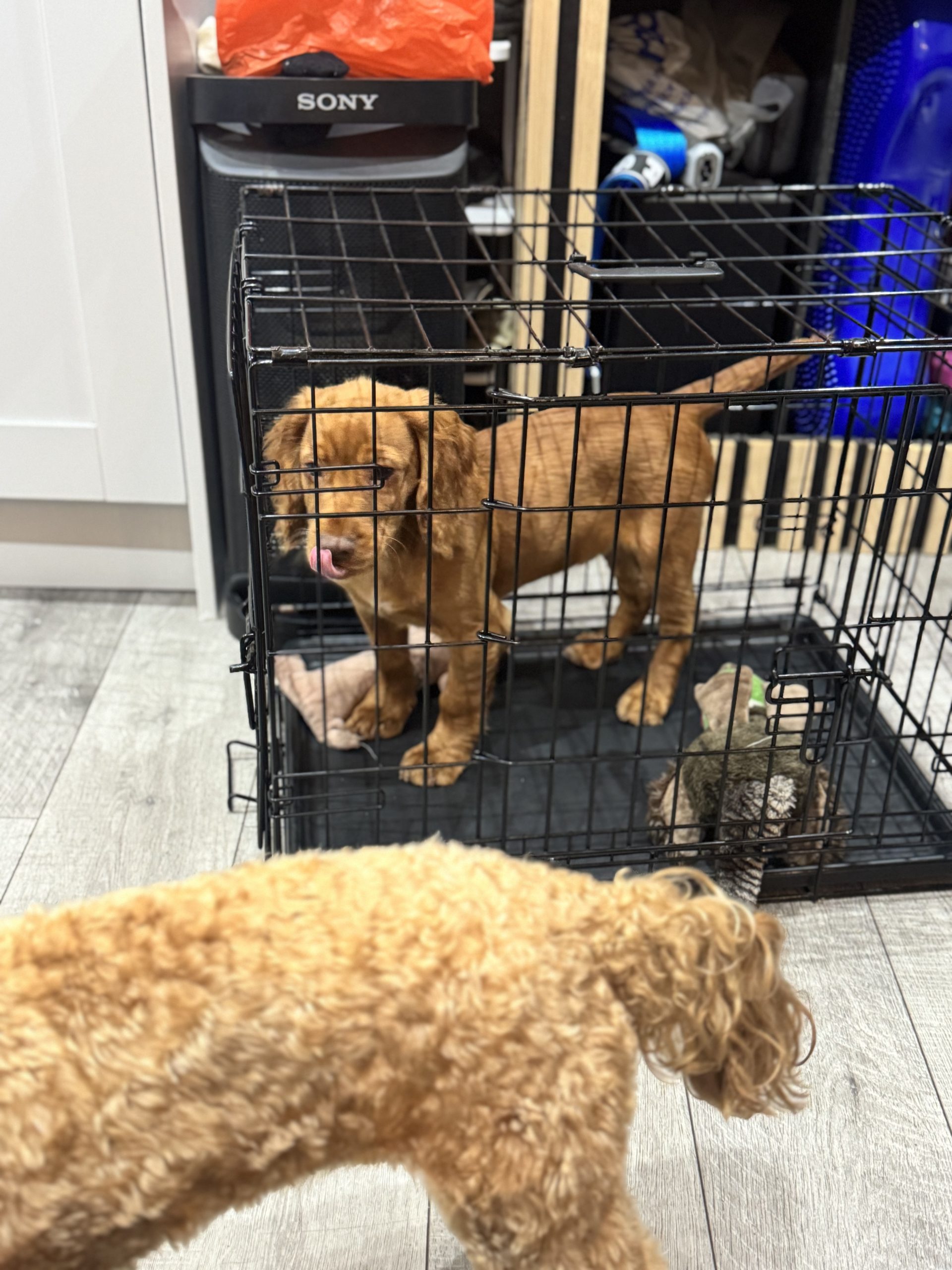
When I brought home Ralphie, my 8-week-old Working Cocker Spaniel, I knew I had to start crate training from day 1. Spaniels are high drive, full of energy and don’t have an off switch built into them, you have to build one into them or they’ll drive themselves and you insane. For us now, the crate has become the foundation of calmness, independence and balance. Read on to see how I did it and my crate training tips. Crate training a Working Cocker Spaniel…..
Why Crate Training is essential for a Working Cocker Spaniel
Working Cockers aren’t your average pet dog, they’re bred to work all day and then some. That means if you don’t give them structure, boundaries and somewhere to switch off, they’ll just keep going until they crash and burn, something you don’t want to ingrain in their little brains or it’ll cause hell for you when they grow up. For me the crate is that switch, it teaches Ralphie that calmness is just as important as drive and that downtime is part of the routine. Without it, you end up with a puppy who’s constantly wired and that’s not good for anyone.
Pre Pup
As per my first post on the blog, you’ll all know why I was so inspired and determined to get a Working Cocker Spaniel. One of my agility trainers, Zoe, loves spaniels and the biggest piece of advice she could give me was exactly what I wrote in the intro. Prior to Ralphie, with my other two dogs, I didn’t routinely crate them unless I went out or ‘discipline’, I say it like that as crating is a controversial and ultimately wrong way to straight up discipline a dog. I personally never associate the crate negatively as punishment, instead, it’s used as a way to remove a dog from ‘the pack’ and that’s the ‘punishment’ as the dog always wants to be involved. With Ralphie, crate training as a Working Cocker Spaniel, I knew this wouldn’t work, the crate had to be a much bigger part of his life and instead be used as a shut-off switch for him. As sad as it is, for the first 4 weeks I never even got a bloody cuddle from my cute chubby puppy but I knew this was for the greater good. My goal for the puppy was to bring him home for the first couple of weeks under a ‘Military regime’: keeping some very strict rules and foundations from day one, not letting him run wild and establishing his place in the pack before letting him explore more.
The First Week
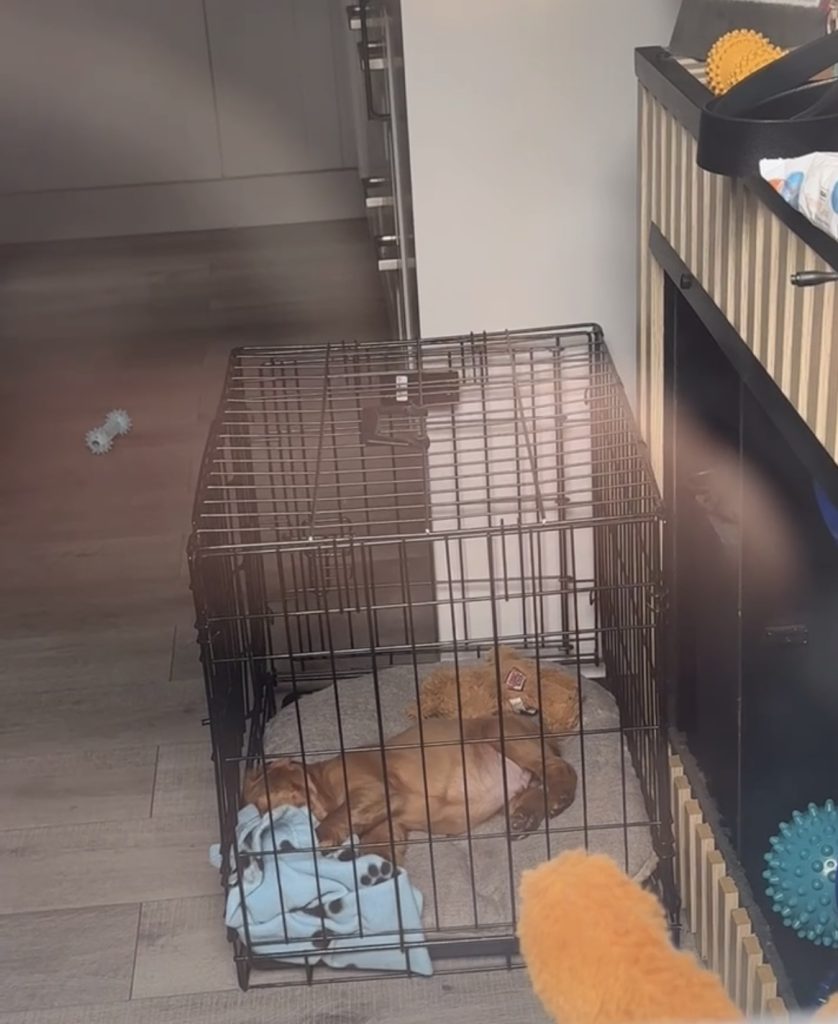
So it was the big day, Sunday 17th August, Ralphie was coming home. I’m from Sheffield but the puppy was from a town just outside of Cardiff, a daunting and long 4+ hour journey with a puppy. We made it home around 7 pm, with the journey being so long he went straight in his crate and as much as you may be expecting to hear a horror story, he was quite chilled with no real crying, etc. Maybe I just got lucky but either way, I still persisted with my crate training. After an hour, Bertie and Frankie arrived home from my mother’s, click here to see how that went. We all got settled again and that’s when the crying started: as expected, my older dogs were quite restless with some little puppy in a crate randomly appearing in our living room and Ralphie was VERY keen to come and play. We all got settled, etc but then it was bedtime. I wasn’t naive to the fact that this was going to be stressful for both Ralphie and me. Then the lights went out and as expected, he started screaming and as upsetting as it sounds in the moment, I’d been here before with both Bertie and Frankie and knew to just ignore it because positively reinforcing this crying with attention was just opening the door to further bad habits being ingrained into his little brain from day one. Eventually it stopped, knowing it wouldn’t be for long, I took full advantage and got straight to sleep to be prepared for the first proper full day. The morning came and just like the little birds tweeting at sunrise, Ralphie started but given he’s an 8 week old puppy, we went straight out for toilet and then I arrived at the crossroads: Do we get up and engage/play with the puppy, potentially risking him associating crying with release or do I re-crate him for half an hour and release him on my saying. This is truly a mind over matter situation that most dog owners get ‘wrong’, I had to leave him in the cage and fight the urge to play with my new puppy.
Teaching Calm Crate Release
I thought this small part deserved its own section. As Ralphie is going to be a Working Cocker Spaniel Gundog, calmness and steadiness needed to be a part of his foundations from day one and whilst this isn’t necessary for all breeds, especially pure pet dogs, impulse control is paramount to having a well trained, obedient puppy and in my opinion, this all starts from the crate release, the biggest impulse a puppy has. To start, I’d open the door slightly, block him with my hand and wait until he stopped pressing against me for even a millisecond and then release him. The important thing here is not to use any commands (here’s a post about general puppy training if you’re interested), since using commands at this point is training him to just purely ignore it, something you don’t want when you’re expecting these commands to be valuable at a later date. Instead, I use noises and a tone, for this I use a ‘ah ah, uh uh’ type of noise in a more serious, deeper tone. As he started to respond to this and our training progressed, I now use the noise which he’s associated with sitting ‘calmly’ (he sits like a loaded spring with his little tail going mental looking like he’s actively fighting the urge to explode) nevertheless, we now get a sit, then as i open the door slowly, he doesn’t self release and i’ve started incorporating it to be a ‘stay’ command. Now with a puppy, we can’t expect perfection, instead, I aim to get the door half open and a couple of seconds of stay before releasing. Now, onto the actual release, whenever you’re releasing your puppy, you need to be consistent with your release command. This isn’t one he’ll ever ignore, as all he wants is to explode into the room. I use a ‘go’ or a ‘come on’ and then comes the ‘good boy’ and sometimes a treat reward. Consistency is key, it doesn’t happen overnight and even the tiniest bit of progress on impulse control is a huge win.
Difference between crying for Toilet and crying for Attention:
The toughest part yet and one that I wasn’t too sure about myself. What’s the difference between him needing the toilet and wanting attention? And how can we be sure puppy isn’t smart enough to pattern the behaviour to being ‘if I cry and go toilet, I get attention after’? To answer the second part, I’m not really sure about that myself. Now the Crate has been the most important part of my toilet training full stop, click here to see I managed toilet training with a crate! Now I’m at a point where 99% of the time when he cries, he needs the toilet, but that didn’t come without its own frustration. We had a bloody horror night where in the space of an hour of trying to watch Harry Potter, we had 7 toilets, some accidents in the crate and a lot of holding back tears. Back to the initial point, it’s all about consistency. Whenever the puppy cried in the crate and he hadn’t been out recently, it was a case of taking him outside, rewarding toilet with a treat or praise but then returning to the crate 80% of the time just to make sure he didn’t associate toiletting with being released.
Where we are now:
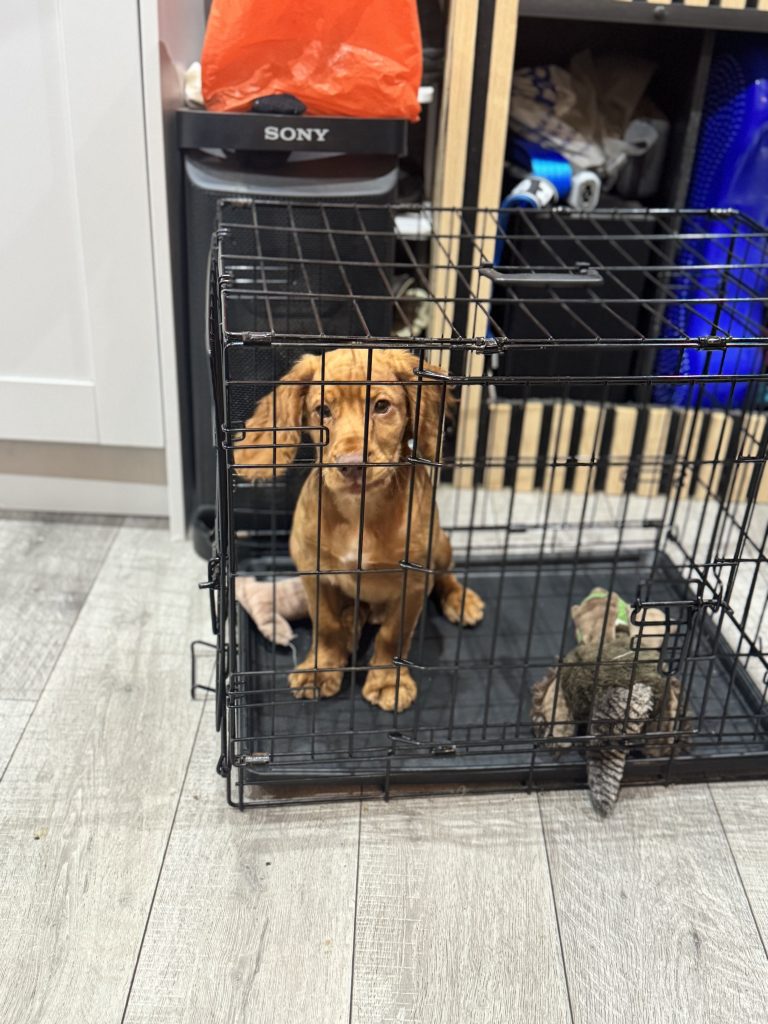
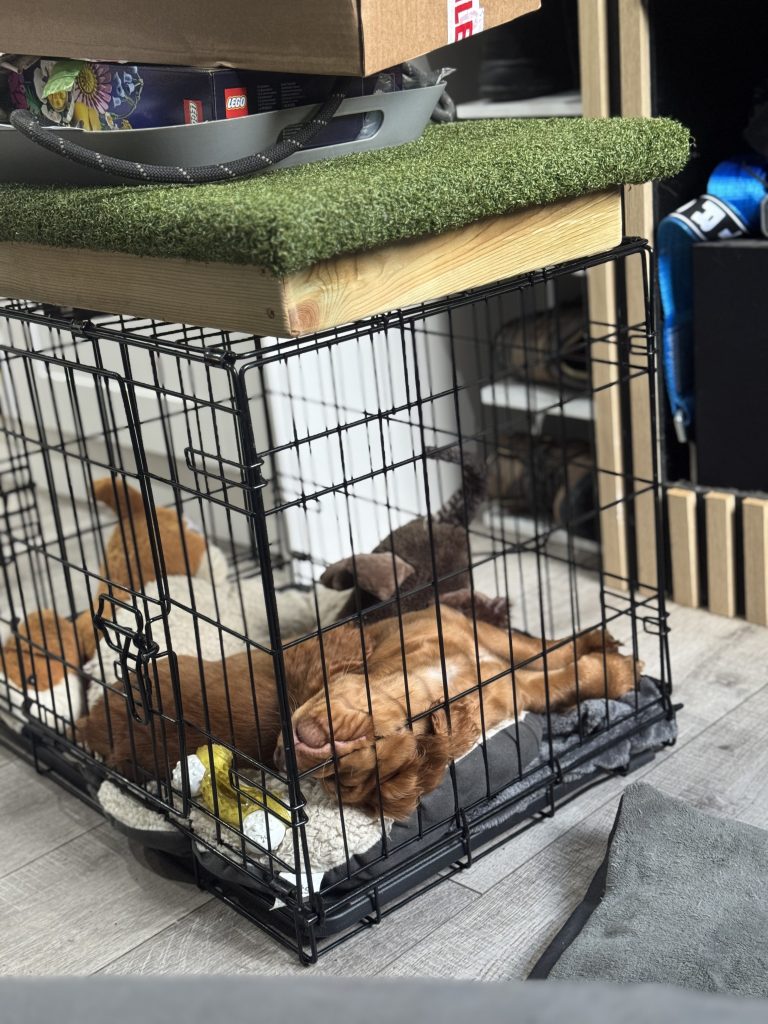
It’s worked, I now have Ralphie in a position where hes completely neutral in the crate, cries are few and far between unless he needs toilet, settles almost instantly when put in there and now we’re just working on a ‘bed’ lure command into crate to transition it from him needing to be placed in there to him going in on command, a natural step to any dog owner. My foundations have remained the same, unless puppy is actively engaged, he remains in the crate so he’s not self-rewarding and patterning mischievous and negative behaviours unsupervised. Ralphie does spend a lot of time in the crate but it’s no different to him than Bertie being sat on the sofa with me whilst writing this or Frankie choosing to lie on the floor and that’s what we all need to remember. Human psychology and dog psychology are two completely different things, whilst us humans associate a crate as a ‘cage’ ‘, prisoner’, etc, if the crate has become a positive thing to our puppies from day one, why would they hate it? I can’t take credit for this line of thinking whatsoever. My training philosophy was inspired by a content creator Cherry Hoggs and whilst he may be blunt and to the point, it works and his line of thinking has made me a much better dog handler. Anyway, back to Ralphie, yes he does spend a lot of time crated and to counter this, we have to mentally and physically stimulate him enough to make sure he does settle in the crate. There will be a related post on how to mentally stimulate a Working Cocker Spaniel Puppy in the near future. For me, crate training hasn’t been about restriction — it’s been about giving my Working Cocker Spaniel puppy the tools to find calmness, balance, and independence. And that’s what true crate neutrality is all about. Ralphie is such a happy and fulfilled puppy and I’m not ashamed whatsoever about how I use the crate in his life and how I’ve achieved crate neutrality for my puppy. Follow his journey and the blog to see what a wonderful dog he’s going to turn into!
2 Comments